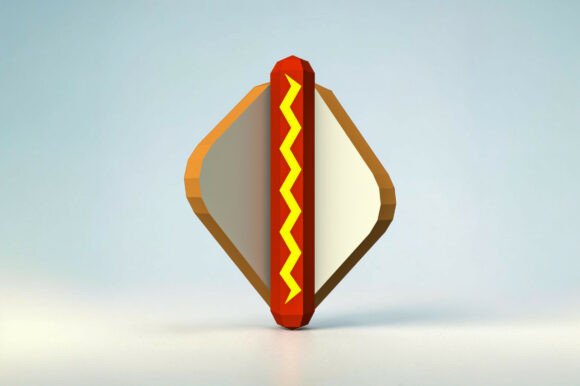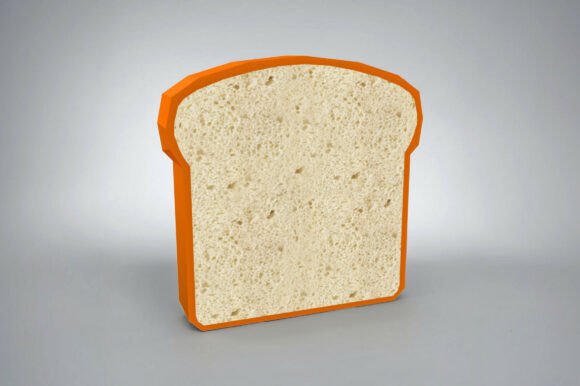
Bread Slice Favor - 3d Papercraft
When I first opened the package for Bread Slice Favor - 3d Papercraft, I expected a standard vector cut file. Instead, I found a clever intersection of papercraft geometry and digital precision that immediately sparked ideas for textile applications. As a designer who spends half my life tweaking stitch densities and the other half worrying about how a finished product will sit on a customer’s shoulder, I look at every new asset with a critical eye. Does it translate? Is it marketable? Will it hold up to real-world use?
This design is not just a flat image; it is a structured object with depth. The description notes an assembled size of 15 x 4 x 15 cms, which suggests a chunky, tactile form. While this is technically a 3D SVG intended for paper assembly, its visual language screams for embroidery adaptation. It has the charm of a bakery treat but the structural integrity of a modern art piece. For those of us in the craft business or running an Etsy shop, understanding how to bridge the gap between digital papercraft and physical stitching is where the magic happens.
First Impressions: Mood and Visual Personality
The immediate appeal of this design lies in its warmth. Bread is universally comforting. In the world of custom apparel and home decor, items that evoke nostalgia or comfort tend to perform well. This particular slice doesn’t look like generic clip art; it has a distinct geometric personality. The layers imply texture—crust, crumb, shadow—which are all elements we try to replicate using thread colors and stitch types.
I see this fitting perfectly into a cozy, rustic, or modern minimalist aesthetic. It feels right at home on a kitchen towel, a linen apron, or perhaps as a statement graphic on a heavyweight sweatshirt. The “favor” aspect of the title suggests gifting, which aligns beautifully with the handmade movement. Customers today are looking for personalized gifts that feel thoughtful and unique, not mass-produced. A design that looks like it requires care and attention to detail commands higher perceived value.
Real-World Application: From Screen to Stitch
Let’s talk about how this would actually function in an embroidery project. Imagine preparing a custom order for a boutique bakery owner. They want branded merchandise that isn’t just a logo slapped on a shirt. They want something that tells their story. Using the geometry of Bread Slice Favor - 3d Papercraft, you could create an applique design where the layers of the bread are represented by different fabric shades, stitched down with a tight satin stitch. Alternatively, you could interpret the 3D effect using varying stitch densities—lighter fill stitches for the soft interior and tighter, darker stitches for the crust.
I recently worked on a series of nursery decor items, and I can confidently say this design would translate beautifully there. A soft, pastel-colored version embroidered onto a muslin blanket or a baby onesie would be incredibly popular. The rounded edges of the slice are forgiving on small hoop sizes, reducing the risk of puckering on delicate fabrics. For baby embroidery, safety and softness are paramount, and a design that avoids sharp, jagged lines is always a winner.
Furthermore, consider the holiday embroidery angle. During autumn and winter, baking-themed items see a surge in demand. This design could serve as a central motif for a set of matching tea towels or a decorative pillow cover. The 15cm assembled height (if scaled appropriately) provides a substantial focal point without overwhelming smaller garments. It strikes a balance between being noticeable and remaining elegant.
Strategic Considerations for Commercial Use
As an Etsy seller or small shop product creator, you need to think about versatility. This design works because it is thematic yet abstract enough to fit multiple niches. It’s not just for bakers; it’s for anyone who loves cozy aesthetics. This broadens your potential customer base significantly.
However, there are practical constraints to keep in mind. If you plan to offer this as a digital embroidery file or a printable mockup, you must ensure the resolution is high enough to convey the details. The original files include PDF, DXF, EPS, PNG, and JPG formats, which gives you flexibility in how you present the final product. For printable mockups, the clean lines of the 3D model will render sharply, helping buyers visualize the end result.
When marketing this as a commercial embroidery asset, emphasize the “handmade” quality. Buyers are willing to pay more for items that show craftsmanship. Highlighting the complexity of translating a 3D concept into a 2D stitch pattern adds value. You aren’t just selling a picture; you’re selling the skill required to bring it to life.
Technical Notes for the Designer
Before committing to production, I strongly advise testing the design on scrap fabric first. Even if you are using the digital files for papercraft, understanding the spatial requirements helps when adapting it for textiles. Check the stitch density carefully. If you attempt to mimic the 3D layers with thread alone, you may run into issues with bulkiness, especially on thin fabrics.
Consider using a stabilizer appropriate for your base material. For stretchy fabrics like t-shirts, a cut-away stabilizer will prevent distortion. For woven cottons used in tote bags or aprons, a tear-away might suffice depending on the design size. Always inspect small details; if the original papercraft relies on tiny tabs for assembly, ensure those details are simplified or enlarged for embroidery clarity. Tiny details often get lost in dense stitch areas.
Also, think about fabric texture. A smooth cotton poplin will showcase the clean lines of this design better than a nubby linen or a fuzzy fleece. If you are working with textured fabrics, simplify the design to avoid visual clutter. Test it in black and white mockups to ensure the contrast levels work before investing time in digitizing or printing.
Final Verdict
Bread Slice Favor - 3d Papercraft is more than just a fun digital file; it is a versatile design asset with strong commercial potential. Its warm, inviting aesthetic makes it suitable for a wide range of products, from custom apparel to home decor. Whether you are creating a one-off personalized gift or scaling up production for a craft fair, this design offers a solid foundation for creativity.
It encourages designers to think beyond traditional motifs and explore how 3D concepts can influence 2D textile arts. By paying attention to detail, choosing the right materials, and understanding your audience, you can turn this simple bread slice into a standout product. For any maker looking to add a touch of whimsy and professionalism to their portfolio, this is a worthy addition. Just remember to check licensing terms if you intend to sell finished goods, and always prioritize quality control in your final finished product.