Review: 3D Religious Wood Cross CNC File
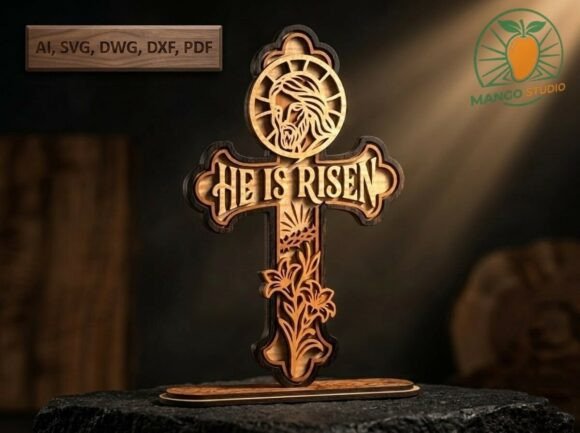
As a designer who spends half my day staring at stitch charts and the other half troubleshooting tension issues on the machine, I have learned to be skeptical of digital files that promise too much. We’ve all seen designs that look stunning in a preview but turn into a tangled mess once they hit the hoop. That is why I approach every new file with a mix of curiosity and caution. Recently, I pulled up the 3D Religious Wood Cross CNC File to see if it holds up under the scrutiny of real-world application. This isn’t just another generic cross design; it claims to offer multi-layer detail with a face of Jesus and a stylized sunrise, aiming for that high-end boutique aesthetic that sells well during Easter and throughout the year.
First Impressions and Visual Personality
The moment you load this machine embroidery design, the layout strikes you as balanced yet intricate. The mood it creates is one of reverence and warmth. Unlike stark, minimalist crosses that can feel cold or modern, this piece leans into tradition with its detailed rendering. The inclusion of the face adds an emotional anchor to the piece, while the sunrise element provides a sense of hope and new beginnings. Visually, it feels like it belongs in a home where faith is central but understated—think nursery walls, dining room accents, or personal devotional spaces.
From a design perspective, the "3D" aspect suggests depth through layering rather than just flat fills. For those familiar with Other Home Decor trends, this fits perfectly into the current demand for textured, dimensional pieces. It has a visual personality that is both comforting and sophisticated. It doesn’t scream for attention; instead, it invites the viewer to lean in and notice the details. This subtlety is exactly what makes a design sellable. Customers today are looking for items that feel curated and thoughtful, not mass-produced.
Real-World Application: The Tote Bag Test
To truly evaluate any embroidery file, I need to see how it behaves outside of the software. My go-to test for medium-sized designs like this is a custom embroidered tote bag. Why? Because canvas is unforgiving. It shows every skipped stitch and every bit of puckering. I imagined placing this cross on a natural linen tote, perhaps centered on the front panel. The size would likely dominate the space without overwhelming it, making it a perfect personalized gift for a church group or a Sunday school teacher.
However, the challenge here lies in the complexity. If you are an Etsy seller or running a small shop product line, you know that production speed matters. A design with this level of detail will take time to stitch. But does the end result justify the minutes spent? In my experience, yes. When a customer sees the fine lines of the facial features and the gradient-like effect of the sunrise (achieved through careful thread color selection), the perceived value of the item skyrockets. It transforms a simple canvas bag into a statement piece. It also works beautifully as a tote bag design for book lovers who appreciate subtle religious symbolism.
Performance on Different Fabrics and Projects
This design is versatile, but it shines brightest on stable, medium-weight fabrics. While it could work for sweatshirt embroidery, the density might make the garment feel stiff around the chest area. Instead, I find it performs exceptionally well on aprons, kitchen towels, and pillow covers. Imagine a white cotton tea towel with this cross stitched in earth tones—terracotta, cream, and soft gold. It becomes a functional art piece that enhances a farmhouse-style kitchen.
For baby embroidery, this design requires a different approach. You might scale it down slightly and use softer, pastel thread colors. The religious theme is timeless, making it a favorite for christening gifts or nursery decor. However, you must be mindful of the stitch density. On thin baby fabrics, dense fill stitches can poke through or cause puckering. Always use a high-quality cut-away stabilizer to ensure the fabric remains soft and pliable after washing.
Another strong use case is the embroidered patch. If you plan to create patches for denim jackets or backpacks, this cross design offers enough detail to look professional even when viewed from a distance. The defined edges help it stand out against rugged textures like denim or corduroy. For holiday embroidery, specifically Easter, this file is a no-brainer. It captures the season’s spirit without being overly cluttered with bunnies or eggs, appealing to customers who prefer traditional religious imagery.
Where to Use Caution
No design is flawless, and there are specific scenarios where this file might struggle. First, avoid using this on highly textured fabrics like heavy bouclé wool or thick fleece. The needle penetration required for the detailed face and sunrise elements may be inconsistent, leading to broken threads or distorted shapes. Similarly, stretchy fabrics like jersey knit require extra stabilization and possibly a tear-away backing to prevent distortion.
Small hoop sizes are another pitfall. If you attempt to digitize or stitch this design in a very small area, the fine details of the face may become muddy. The distinction between the sunrise rays and the background could disappear, turning the image into a blob of color. Always check the hoop size recommendations provided by the creator. If they aren’t listed, err on the side of caution and start with a medium hoop.
Curved surfaces, such as caps or hats, present their own challenges. While the overall shape of a cross is symmetrical, the internal details need to follow the curve smoothly. If the cap is too curved, the face might appear stretched or squashed. For these applications, consider using a rigid backing or a specialized hat frame to maintain the integrity of the design. Also, be wary of dark fabrics. Unless you use a substantial underlay or a contrasting base fabric, the lighter threads used for the sunrise might get lost in the darkness.
Practical Designer Notes for Success
Before you rush to produce hundreds of units for your craft business, take these steps to ensure quality:
- Test on Scrap Fabric: Always run a test stitch-out on the exact fabric you plan to use. This reveals issues with thread tension, stabilizer choice, and hooping pressure.
- Check Thread Color Contrast: The effectiveness of this design relies heavily on color. Ensure that the thread colors provide enough contrast against the fabric, especially for the finer details of the face.
- Inspect Small Details: Zoom in on the digital preview. Are the eyes clear? Is the sunrise distinct? If the details look jagged on screen, they will likely look worse on fabric.
- Use Proper Stabilizer: Depending on your fabric, choose between cut-away, tear-away, or wash-away stabilizers. For a project like a pillow cover, a cut-away stabilizer ensures longevity and prevents sagging over time.
- Black and White Mockups: Convert your design to black and white to check the balance of light and dark areas. This helps you visualize how the eye will travel across the piece.
- Confirm Licensing: Before selling finished items or offering this as a digital embroidery file, verify the licensing terms. Some creators allow commercial use with purchase, while others restrict it to personal projects only.
Final Verdict
The 3D Religious Wood Cross CNC File is a strong addition to any designer’s library. It bridges the gap between traditional religious iconography and modern embroidery aesthetics. Its multi-layered approach gives it depth and character, making it suitable for a wide range of products, from custom apparel to home decor. While it demands careful execution regarding fabric choice and stabilization, the payoff is a professional-looking finished product that resonates with buyers on an emotional level.
For creative entrepreneurs and makers looking to expand their catalog with meaningful, high-quality items, this design delivers. It is not just a cross; it is a conversation starter. Whether you are creating a printable mockup for your online store or stitching the first unit for a client, this file provides a solid foundation for success. Just remember: great embroidery is about more than just the file—it’s about the care you put into the execution. With the right preparation, this design will serve you well.