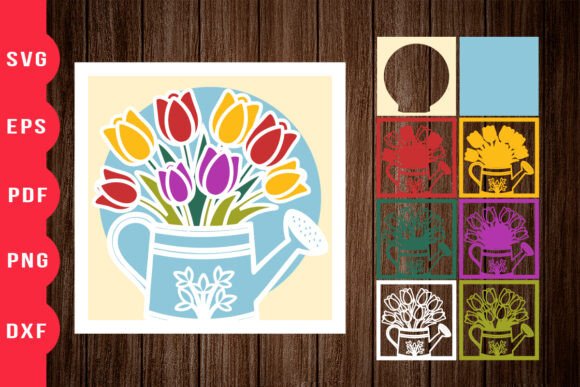
Tulip Watering Can 3D Shadow Box Review
As a designer who spends half my day digitizing and the other half testing stitches on scrap fabric, I don’t just look at an embroidery file; I look at its potential. I evaluate how it will behave under the needle, how it will sit on a finished product, and whether it has the "shelf appeal" to sell in a crowded marketplace. When I first pulled up Tulip Watering Can 3D Shadow Box, I didn’t just see a graphic; I saw a mood board come to life. It’s springtime energy captured in thread, but the real question for any embroiderer is: does it translate from screen to stitch with clarity and charm?
This design falls into the fascinating category of Shadow Boxes and utilizes a 3D SVG aesthetic that implies depth. For those unfamiliar, this usually means the design uses layering techniques—often combining different stitch types or applique elements—to create a pop-out effect. My initial impression is that this is not a simple one-color fill. It requires thoughtful execution to maintain its visual integrity. The theme is undeniably cheerful, evoking a fresh, cozy spring feeling that resonates strongly with current trends in home decor and handmade gifting.
First Impressions and Visual Personality
The moment you preview the layout, the design communicates warmth. The tulip motif is classic, but the watering can adds a narrative element—it suggests care, growth, and domestic comfort. Visually, the composition feels balanced. It doesn’t scream for attention; rather, it invites the viewer in. This subtlety is crucial for high-end handmade products. In a market saturated with loud, busy graphics, a design that offers a quiet, elegant statement often commands higher perceived value.
The "3D" aspect relies heavily on contrast and stitch definition. If executed well, the shadow box effect creates a tactile experience. Customers love touching their purchases. An embroidered piece that has physical dimension stands out in photos for Etsy listings and social media mockups. It looks more expensive than it likely costs to produce, which is the holy grail for small business owners. However, this effect only works if the underlying digitization is clean. There is no room for messy underlay or inconsistent tension here, as it would ruin the illusion of depth.
Real-World Application: From Screen to Stitch
I recently considered using Tulip Watering Can 3D Shadow Box for a custom order—a set of personalized kitchen towels for a bride-to-be who loves gardening. Here is how I thought through the process:
- Custom Apparel & Tote Bags: Imagine this stitched onto a heavy canvas tote bag. The durability of the stitching combined with the whimsical imagery makes it a perfect accessory for farmers' markets or library runs. It pairs beautifully with neutral linen or cream-colored cottons. The design has enough visual weight to stand out on a large surface area without overwhelming the garment.
- Baby Embroidery & Nursery Decor: Spring themes are perennial favorites for baby showers. Placing this on a muslin burp cloth or a small hooded towel creates an instant gift-worthy item. The softness associated with tulips and water translates well to baby items, suggesting gentleness and care. It fits seamlessly into a pastel or earth-tone color palette common in modern nurseries.
- Holiday Embroidery & Seasonal Goods: While clearly spring-themed, the watering can motif has year-round utility. It could be adapted for summer garden parties or even used as a subtle "new beginnings" theme for housewarming gifts. Its versatility extends beyond just March and April, making it a smart asset for your design assets library.
- Embroidered Patches: The contained nature of the shadow box format makes it ideal for patch application. Whether iron-on or sewn onto denim jackets, the defined edges help it read clearly even when scaled down slightly.
Technical Considerations and Fabric Choices
No design exists in a vacuum. How Tulip Watering Can 3D Shadow Box performs depends entirely on your material choices. As an experienced reviewer, I must highlight where this design shines and where it might struggle.
Where it thrives:
This design excels on stable, medium-weight fabrics. Woven cotton, linen blends, and felt provide the perfect foundation for the intricate details required to achieve the 3D shadow effect. The stabilizer choice is critical here; you need a cut-away stabilizer for garments like sweatshirts or tote bags to prevent puckering over time. For smaller items like tea towels, a tear-away might suffice, but always test first.
The use of satin stitch for outlines and fill stitch for the main bodies needs to be precise. The contrast between thread colors is what drives the shadow box illusion. If you choose threads that are too similar in tone, the 3D effect flattens, and the design loses its impact. I recommend using a darker thread for the base shadows and a lighter, brighter thread for the tulip petals to enhance the pop.
Where to be careful:
Avoid placing this on highly textured fabrics like chunky knits or fleece unless you are an advanced user. The needle penetration may become uneven, distorting the delicate lines of the watering can spout. Similarly, stretchy fabrics like thin jersey require excellent stabilization to prevent the design from warping during washing. Dark fabrics can work, but they demand high-contrast thread choices; otherwise, the subtle shading details may get lost in the background.
Impact on Product Value and Brand Consistency
For Etsy sellers and craft business owners, the difference between a good listing and a great one often comes down to presentation. A design like Tulip Watering Can 3D Shadow Box elevates the perceived quality of your brand. It signals that you pay attention to detail and offer unique, thematic collections rather than generic clip-art applications.
When customers buy a personalized gift, they are buying into an emotion. This design taps into feelings of renewal and domestic joy. By offering products that evoke these emotions, you build customer trust and encourage repeat purchases. It also aids in brand consistency; if your shop focuses on botanicals, home comfort, or seasonal greetings, this design reinforces that identity perfectly.
Practical Designer Notes Before You Stitch
Before you commit this machine embroidery design to your final product, follow these professional steps:
- Test on Scrap Fabric: Never skip this step. Run the design on the exact fabric and stabilizer combination you plan to use. Check for thread breaks, tension issues, and hoop burn.
- Check Stitch Density: Ensure the stitch density is appropriate for your fabric. Too dense, and the fabric becomes stiff and unyielding; too sparse, and the backing shows through.
- Verify Hoop Size: Confirm the hoop size requirements match your machine. If the design is larger than your standard hoop, you may need to rehoop, which requires precision to keep the alignment perfect.
- Inspect Small Details: Zoom in on the digital file. Are the tiny details of the watering can handle clear? Will they stitch cleanly, or do they risk merging together?
- Mockup in Black and White: Convert your mockup to grayscale. This helps you assess the contrast levels without being distracted by color. If the shapes don't read clearly in black and white, they won't read clearly in embroidery.
- Confirm Licensing: Always review the license agreement. Ensure you have the right to sell commercial embroidery items made from this file. Some digital embroidery files are for personal use only.
In conclusion, Tulip Watering Can 3D Shadow Box is a versatile, emotionally resonant design that offers significant potential for both personal projects and commercial ventures. Its strength lies in its ability to convey a specific mood while maintaining visual interest through its 3D styling. With careful attention to fabric choice, thread contrast, and stabilization, it can become a standout piece in your embroidery project portfolio. It is not just a design; it is a tool for creating memorable, high-quality finished products that customers will cherish.