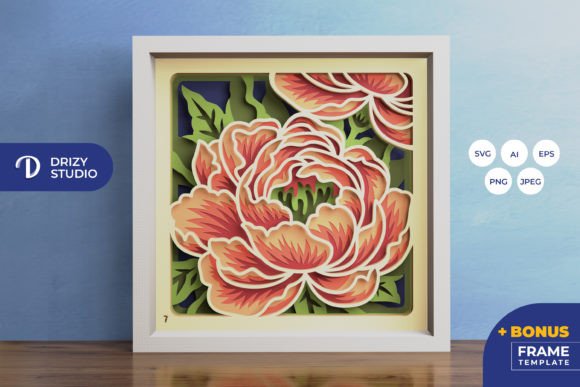
Peony Petals 3D Shadow Box: A 3D SVG Review for Modern Content Creators
In the world of digital publishing, visual communication is not merely decorative; it is functional. As a blog designer and digital publisher who has spent years refining editorial layouts and optimizing content performance, I evaluate every graphic design asset based on one critical question: does it enhance reader trust and engagement? Today, I am reviewing the Peony Petals 3D Shadow Box, a layered, square paper-cutting template that promises to elevate the aesthetic quality of digital content. This review focuses on how this specific 3D SVG fits into real-world workflows for bloggers, affiliate marketers, online educators, and creative entrepreneurs.
The First Impression: Editorial Mood and Visual Identity
When you first load the Peony Petals 3D Shadow Box – Peony Flower 3D Paper Cut, the immediate sensation is one of refined elegance. The layered construction creates a sense of depth that flat vector graphics often lack. For a content creator, this depth translates directly into perceived value. The design exudes a lifestyle-focused, feminine, and artistic mood, making it an ideal match for niches such as wellness, home decor, wedding planning, botanical illustration, or high-end lifestyle blogging.
Unlike generic stock photos, which can feel impersonal, this design asset offers a unique visual signature. It feels modern yet timeless, clean but rich in detail. When used correctly, it signals to the reader that the content behind the image is curated with care. In an era where users scroll rapidly, a sophisticated visual hierarchy helps your content stand out. The Peony Petals 3D Shadow Box achieves this by offering a focal point that is intricate enough to hold attention but structured enough to remain legible when paired with typography.
Integrating the Asset into Real Publishing Workflows
A graphic design asset is only as good as its application. I have tested this 3D SVG across several common publishing scenarios to determine its versatility. Here is how it performs in actual content marketing projects:
- Blog Featured Images: The square format of the Peony Petals 3D Shadow Box aligns perfectly with standard social media sharing ratios. When used as a featured image, it provides a polished header that encourages clicks from social feeds.
- Pinterest Graphics: Pinterest is a visual search engine where aesthetics drive traffic. This social media graphics element works exceptionally well as a background or accent for Pinterest pins. Its layered look adds texture without overwhelming the text overlay, provided there is sufficient contrast.
- Digital Guides and Lead Magnets: For those creating downloadable resources, worksheets, or eBooks, this asset can serve as a cover design element. It elevates a simple PDF into a premium digital product, increasing the perceived value of your lead magnet.
- Newsletter Headers: Email open rates are influenced by visual appeal. Using this editorial design element in your newsletter banner can reinforce brand identity and make your emails feel more professional and less transactional.
- Category Thumbnails: If your website organizes content into categories, using variations of this creative design asset can create a cohesive library of thumbnails that guide readers intuitively through your site.
Impact on Content Performance and Reader Trust
Why does this matter for your bottom line? Consistent, high-quality visuals contribute significantly to brand identity. When a visitor lands on your page, they form an opinion within seconds. A cluttered or low-resolution design suggests amateurism, while a polished layout suggests authority.
By incorporating the Peony Petals 3D Shadow Box into your web design strategy, you establish a stronger visual identity. This consistency improves reader trust because it signals professionalism. Furthermore, better visual hierarchy allows readers to scan content more easily. When your images support your headlines rather than competing with them, click-through potential increases. Whether you are promoting an affiliate link or selling a digital download, the right imagery reduces friction and guides the user toward conversion.
Strategic Placement: Where It Works Best
To maximize the impact of this design asset, strategic placement is key. The Peony Petals 3D Shadow Box excels in areas where visual breathing room exists:
- Hero Images: Use it as a subtle background layer behind bold, sans-serif headlines. The depth of the 3D effect will make the text pop.
- Editorial Accents: Place small instances of the petal layers in the margins of long-form articles to break up text blocks and maintain reader interest.
- Social Media Previews: Ensure your Open Graph images utilize this asset to ensure your links look attractive when shared on Facebook, LinkedIn, or Twitter.
- Media Kits: For influencers and bloggers seeking sponsorships, including this type of high-quality commercial design in your media kit demonstrates your ability to produce premium content.
Areas Requiring Caution
No single asset is universally perfect. There are specific contexts where the Peony Petals 3D Shadow Box should be used carefully or avoided entirely:
- Small Mobile Thumbnails: On very small screens, the intricate layers may blur or become indistinguishable. Always test how the image renders at thumbnail size.
- Text-Heavy Blog Images: If your graphic already contains a lot of copy, adding a complex 3D background can reduce readability. Keep the background simplified or use it sparingly.
- Serious Professional Niches: For corporate finance, legal advice, or serious medical content, this floral design may feel too playful or decorative. In these cases, a more minimal modern design approach is usually preferred.
- Low-Contrast Backgrounds: Ensure your background color contrasts sufficiently with the shadows of the paper cut. Poor contrast can make the 3D effect disappear, leaving a flat, muddy appearance.
Practical Publisher Notes for Implementation
Before integrating the Peony Petals 3D Shadow Box into your live website or campaigns, consider these technical and creative checks:
Test Across Devices: View the asset on desktop, tablet, and mobile. Check how it looks as a thumbnail in feed views. Does it retain its impact when scaled down?
Typography Pairing: Experiment with font combinations. Place the design beside serif fonts for a classic editorial look, sans-serif fonts for modern clarity, or script fonts for a personal touch. Avoid pairing it with handwritten fonts unless you are aiming for a very specific craft aesthetic.
Performance Optimization: Even though this is a vector-based concept, if you export it as a raster image for web use, ensure proper compression. Large file sizes can slow down page load times, which negatively impacts SEO and user experience. Confirm that your Canva template or design software exports optimized PNGs or WebPs.
Licensing Verification: Always confirm your commercial license before using any design assets on monetized websites, affiliate pages, or paid content products. Understanding the terms of use protects your business and ensures you can legally profit from your creations.
In conclusion, the Peony Petals 3D Shadow Box is a versatile and high-quality addition to any content creator’s toolkit. By understanding its strengths in editorial design and respecting its limitations in dense layouts, you can leverage this 3D SVG to create visually compelling, trustworthy, and professional content that resonates with your audience.