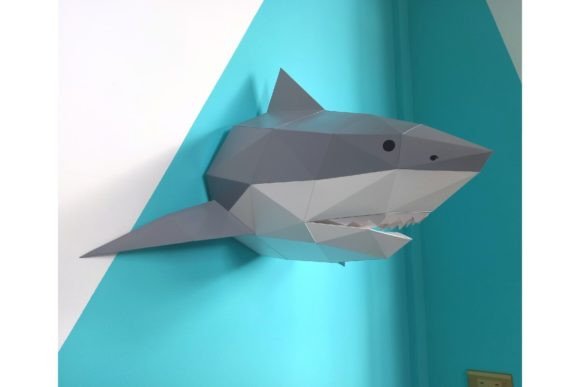
3D Papercraft Shark: A 3D SVG Asset for Animals
When I first opened the file for 3D Papercraft Shark, my initial reaction was one of cautious optimism. As a graphic designer who frequently bridges the gap between digital mockups and physical production, I am always skeptical of assets that promise "intricate details" but often deliver messy, unprintable lines. However, this particular design caught my eye during a recent search for unique visual elements for a boutique aquatic-themed brand client. The prompt described it as a true standout and a great decoration, crafted with intricate details for a DIY project with an SVG cutting file. But does it hold up under professional scrutiny? Can it survive the rigors of real client work, from high-resolution print to social media scaling?
The immediate impression is one of playful sophistication. Unlike standard flat vector illustrations, this asset leverages the geometric nature of polygon art to create depth without relying on complex shading gradients. It feels modern, tactile, and highly engaging. For a small business owner or a handmade brand looking to differentiate their packaging or merchandise, this kind of visual language offers a distinct advantage. It signals creativity and attention to detail, qualities that resonate strongly with consumers in the creative marketplace.
Visual Mood and Design Direction
In terms of aesthetic, 3D Papercraft Shark occupies a sweet spot between whimsical and structured. The angular facets give it a contemporary edge, making it suitable for projects that want to feel fun but not childish. This is particularly relevant for brands targeting millennials and Gen Z, audiences who appreciate both nostalgia and modern minimalism. The style naturally fits into themes involving ocean conservation, summer campaigns, nautical events, or educational materials for children’s products.
For a brand identity project, this asset can serve as a powerful focal point. Imagine it centered on a matte black box for a limited-edition snack product, or embossed on a kraft paper bag for a local beachside café. The geometric precision of the design ensures that it remains recognizable even when scaled down, provided it is used with intention. It brings a sense of movement and dynamism to static layouts, which is crucial for capturing attention in crowded digital feeds or physical retail environments.
Practical Applications in Client Projects
So, where exactly does this graphic design asset shine in a professional workflow? I have evaluated its performance across several common use cases for digital sellers, print-on-demand providers, and marketing teams.
- Packaging Design: This is perhaps the strongest use case. The polygonal structure translates beautifully to die-cut packaging or window displays. When applied to product labels, it adds a layer of perceived value, suggesting that the brand cares about premium presentation.
- Social Media Graphics: For Instagram posts and Pinterest pins, the high-contrast geometric lines pop effectively against solid color backgrounds. It works exceptionally well as a hero graphic for announcements, such as a new product launch or a seasonal sale.
- Merchandise and Apparel: While complex designs can sometimes lose clarity on fabric, the bold outlines of this shark make it viable for screen printing on t-shirts or tote bags. It also serves as an excellent base for sublimation design, where the full color range of the polygon facets can be utilized.
- Event Materials: For local events, festivals, or workshops related to marine life, this asset provides ready-made visual cohesion. It can be adapted for flyers, invitations, and banners, ensuring a consistent look across all marketing visuals.
- Digital Products: For creators selling on Etsy or other platforms, this SVG design is a versatile component. It can be integrated into larger design bundles, used in Canva templates, or sold as a standalone cut file for Cricut users. Its versatility makes it a valuable addition to any digital product library.
Strategic Placement and Hierarchy
Not every design element deserves equal weight, and understanding where to place 3D Papercraft Shark is key to maintaining a polished result. In large layout areas, such as website headers or poster backgrounds, it can act as a primary visual anchor. Here, it commands attention and sets the tone for the entire piece. When used in product mockups, it enhances the narrative, telling a story about the product’s origin or theme without needing excessive copy.
However, there are scenarios where caution is advised. In minimalist branding, where whitespace and simplicity are paramount, the intricate details of this shark might compete with the logo or typography, creating visual clutter. Similarly, in crowded layouts or complex backgrounds, the asset may lose its definition. If the background has competing patterns or low contrast, the geometric edges of the shark could blend in, reducing readability and impact.
Furthermore, consider the emotional appeal and audience engagement carefully. While the design is charming, it may not align with professional corporate materials that require a more serious or authoritative tone. For legal firms, financial institutions, or healthcare providers, this asset might undermine visual trust and recognition. It is best reserved for projects that prioritize approachability, creativity, and fun.
Technical Considerations for Designers
Before integrating this asset into a final client deliverable, there are several technical checks every designer should perform. First, test the design in black and white. This helps evaluate the structural integrity of the polygon shapes and ensures that the design relies on form rather than color alone. Check the contrast on both light and dark backgrounds to guarantee visibility and legibility.
Previewing the asset at various sizes is also critical. Zoom out to see how it performs as a small icon or thumbnail, and zoom in to inspect the quality of the paths. If you are using it for print, review the file formats closely. Ensure that the SVG is clean, with no unnecessary nodes or overlapping paths that could cause issues during cutting or printing. If a PNG version is included, inspect the transparency edges for jaggedness or halos.
Typography pairing is another important factor. The geometric nature of the shark pairs well with sans serif fonts for a modern look, or display fonts for a bolder statement. Avoid script or handwritten fonts unless they are carefully balanced, as they may clash with the sharp angles of the design. Finally, confirm the commercial license before using the asset for any client or business project. Understanding the usage rights protects both you and your client from potential legal issues.
Final Verdict
3D Papercraft Shark is more than just a cute illustration; it is a functional creative design tool that can elevate a project’s visual mood. Its thoughtful construction and intricate details make it a strong candidate for brands seeking a unique, modern aesthetic. Whether you are designing packaging, creating social media graphics, or developing a new brand identity, this asset offers flexibility and charm. By applying careful judgment regarding placement, scale, and context, designers can harness its potential to create memorable and effective visual communications. For those in the handmade business, small business branding, or digital content creation, it represents a worthwhile investment in their design arsenal.