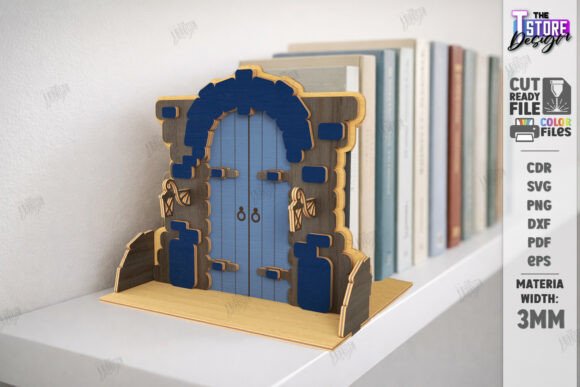
3D Decorative Door Bookends Laser Cut
When I first opened the file for 3D Decorative Door Bookends Laser Cut, my immediate reaction was not just about the geometry, but about the narrative potential. As a brand designer and content marketer, I am constantly scanning for visual assets that do more than just fill space; they need to evoke emotion and establish a specific tone before a single word is read. This asset immediately signals a sense of whimsy, nostalgia, and tactile craftsmanship. It feels less like a flat vector and more like an invitation into a miniature world.
The mood it creates is distinctly cozy yet magical. In a digital landscape saturated with sleek, minimalist corporate imagery, this design offers a warm, vintage-inspired contrast. It suggests a storybook quality that resonates deeply with audiences seeking comfort, creativity, or escapism. For brands operating in the home decor, handmade goods, or literary niches, this asset provides an instant emotional hook. It transforms a standard product shot or social media post into a scene, encouraging the viewer to pause and imagine the details. The layered 3D effect, even in a digital preview, promises depth and complexity, which is crucial for maintaining visual interest without cluttering the composition.
Integrating Fantasy Elements into Real-World Marketing Campaigns
To understand the true value of this asset, let us look at a practical scenario. Imagine you are a small business owner launching a new line of handcrafted wooden toys or a subscription box for book lovers. You are preparing a launch campaign that needs to feel premium yet approachable. You are designing a series of Instagram posts, Pinterest pins, and email headers to build anticipation.
In this workflow, Decorative Door Bookends Laser Cut 3D Layered Fairy Door SVG Miniature Book Nook Shelf Decor Styles Fantasy Door Bookends SVG Magic Portal Book End Laser File Vintage Style Library Decor Laser Cutting serves as a versatile anchor. Instead of using generic clipart, you utilize this specific design to create a cohesive visual theme. For your email banner, you might place the door graphic against a soft, textured background, using the "portal" aspect as a metaphor for discovering new products. The laser-cut aesthetic implies precision and care, qualities you want associated with your brand identity. By integrating this asset, you are not just selling a product; you are selling an experience of wonder and attention to detail.
This approach works exceptionally well for content marketing strategies that rely on storytelling. When you use such a distinct graphic element, you signal to your audience that you understand their desire for beauty and intricacy. It elevates your marketing visuals from functional to aspirational. Whether you are creating a lead magnet for a creative writing course or designing packaging inserts for a candle brand, this asset helps bridge the gap between the physical product and the digital perception of your brand.
Strategic Applications Across Brand Identity and Digital Assets
The versatility of this graphic design asset extends far beyond simple decoration. In the realm of brand identity, it can serve as a key motif for sub-brands or seasonal collections. For instance, a publisher might use similar door motifs to mark different genres in their catalog, creating a recognizable system for readers. In logo design contexts, elements of the intricate cut-out patterns could inspire custom icons or badges that denote authenticity or artisanal quality.
For social media graphics, particularly on platforms like Pinterest and Instagram, visual hierarchy is paramount. This asset naturally draws the eye due to its complex internal structure. When used in Pinterest pins, it can act as a frame or a focal point that stops the scroll. Designers can layer text over the negative spaces created by the laser-cut style, ensuring readability while maintaining aesthetic appeal. Similarly, for Facebook ads promoting home decor items, pairing this graphic with high-quality photography of actual shelf setups can create a compelling juxtaposition between the digital art and the tangible reality of the product.
In packaging design, the asset’s laser-cut inspiration translates beautifully to die-cut windows or embossed details. Even if you are printing digitally, mimicking the look of layered paper adds a perceived value that enhances the unboxing experience. For product labels, especially for niche markets like craft supplies or specialty teas, this design communicates heritage and skill. It suggests that the contents are curated with the same care as the artwork itself.
Furthermore, this asset supports stronger engagement by fostering an emotional connection. Audiences trust brands that demonstrate artistic integrity. By incorporating high-quality, thematic design assets like this, you reduce the risk of your brand looking generic or mass-produced. It contributes to a professional appearance that commands respect and curiosity. In editorial design, such as blog headers or newsletter graphics, it adds a touch of personality that aligns with modern design trends favoring unique, hand-crafted aesthetics over sterile templates.
Where the Asset Shines and Where Caution Is Required
This design excels in hero graphics, campaign headers, and promotional banners where it can be displayed at larger sizes to showcase its intricate details. It is ideal for branded templates, social media covers, and decorative brand elements that need to stand out without overwhelming the message. For content bundles sold to other creators, it offers immense value as a standalone Svg design or PNG design that can be easily manipulated.
However, there are limitations. This asset should be used carefully in formal corporate branding where stark professionalism is required. The whimsical nature may clash with serious financial or legal messaging. Additionally, avoid placing it in dense information layouts or small mobile graphics where the fine details of the laser-cut pattern may become muddy or indistinguishable. Low-contrast backgrounds can also obscure the depth of the 3D layers, so ensure sufficient contrast to maintain legibility. Overly minimal brands might find the intricacy too busy, and text-heavy ads should prioritize clear typography over decorative elements to avoid visual competition.
Practical Notes for Implementation and Commercial Use
Before integrating this asset into your campaigns, consider these practical steps. Test it with your existing brand color palette to ensure harmony. Check how it performs in black and white to assess its structural integrity independent of color. Place it inside real campaign mockups to visualize its impact in context. Preview it on mobile screens to confirm that the details remain visible at smaller resolutions. Readability in small sizes is critical; if the text competes with the graphic, simplify the layout.
Compare it against competitor visuals to ensure it offers a unique advantage. Experiment with typography: it pairs beautifully with serif fonts for a classic look, sans-serif fonts for modern contrast, script fonts for elegance, handwritten fonts for a personal touch, and display fonts for bold statements. Review spacing and balance to prevent clutter. Finally, and most importantly, confirm commercial licensing before using it in paid campaigns, client work, or business branding. Understanding the terms ensures that your commercial design efforts are protected and compliant.
Ultimately, 3D Decorative Door Bookends Laser Cut is more than just a decorative item; it is a strategic tool for enhancing visual hierarchy and building audience trust. For designers, marketers, and entrepreneurs looking to add a layer of sophistication and storytelling to their home decor or lifestyle brands, this asset provides a strong foundation for memorable and effective visual communication.